
Soba cup
Unknown Artist
19th century
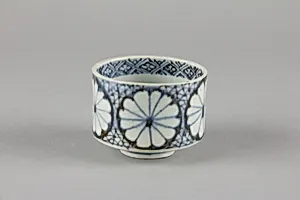
Medium
Porcelain painted with underglaze cobalt (Hizen ware)
Dimensions
H. 2 3/8 in. (6 cm); Diam. 3 1/8 in. (7.9 cm)
Classification
Ceramics
Culture & Period
Japan · Edo period (1615–1868)
Department
Asian Art
Museum
Metropolitan Museum of Art, New York, NY
Credit
The Harry G. C. Packard Collection of Asian Art, Gift of Harry G. C. Packard, and Purchase, Fletcher, Rogers, Harris Brisbane Dick, and Louis V. Bell Funds, Joseph Pulitzer Bequest, and The Annenberg Fund Inc. Gift, 1975
Accession Number
1975.268.654
Rights
Public Domain
Art Historical Context
This delicate soba cup, crafted in the 19th century during Japan's Edo period (16151868), exemplifies the porcelain production of Hizen ware from the Arita kilns in Kyushu. Measuring just 2 3/ inches tall and 31/8 inches in, its petite scale ideal for sipping the hot broth of soba noodles, a staple of everyday Japanese cuisine. The medium—porcelain painted with underglaze cobalt blue— vibrant, enduring designs fired beneath a clear glaze, a technique adapted from Chinese imports but mastered in Japan for its clarity and depth of color. Hizen ware, produced in the Hizen province, marked a pinnacle of Japanese ceramics during the Edo era, blending functionality with subtle artistry. These cups were often exported or used domestically, reflecting the period's booming trade and domestic prosperity under the Tokugawa shogunate. The underglaze cobalt not only resisted wear from daily use but also allowed intricate motifs like florals or landscapes to emerge vividly after firing. As part of The Harry G. C. Packard Collection at The Metropolitan Museum of Art, this unassuming vessel highlights how humble objects embodied Edo Japan's aesthetic harmony—wabi-sabi in miniature—bridging utility and quiet beauty in Asian art traditions.