
Soup tureen
Unknown Artist
1759–60
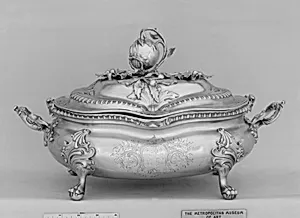
Medium
Silver
Dimensions
9 3/4 × 15 1/4 in. (24.8 × 38.7 cm)
Classification
Metalwork-Silver
Culture
British, London
Department
European Sculpture and Decorative Arts
Museum
Metropolitan Museum of Art, New York, NY
Credit
Rogers Fund, 1913
Accession Number
13.42.44a, b
Rights
Public Domain
Tags
Art Historical Context
This elegant silver soup tureen, in London around 1759–60, exemplifies the exquisite metalwork of mid-18th-century Britain the reign of George III. Standing at 9 3/4 × 15 1/4 inches, it was designed for grand dining tables in affluent households, where such vessels served both practical and display purposes. London silversmiths were renowned for their technical mastery, often employing techniques like chasing, engraving, and casting to create durable yet opulent pieces marked by the era's hallmark for authenticity and quality. The tureen's decoration features intricate pomegranates—symbols of abundance, fertility, and prosperity in European iconography—and a prominent coat of arms, suggesting it was a bespoke commission for a specific family or patron. These heraldic motifs, rendered with fine detail, highlight the object's role as a status symbol, blending functionality with personal identity in the formal rituals of Georgian-era entertaining. Acquired through the Rogers Fund in 1913, this tureen now graces the Metropolitan Museum of Art's European Sculpture and Decorative Arts collection. It offers visitors a tangible glimpse into the refined tastes and craftsmanship of Britain's silver trade, a cornerstone of its luxury export economy.