
Souvenirs Covered with Wrapping Cloth
probably 1816
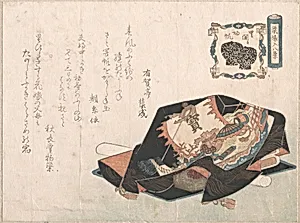
Medium
Woodblock print (surimono); ink and color on paper
Dimensions
5 1/2 x 7 3/8 in. (14 x 18.7 cm)
Classification
Prints
Culture & Period
Japan · Edo period (1615–1868)
Department
Asian Art
Museum
Metropolitan Museum of Art, New York, NY
Credit
H. O. Havemeyer Collection, Bequest of Mrs. H. O. Havemeyer, 1929
Accession Number
JP2189
Rights
Public Domain
Art Historical Context
This delicate woodblock print, *Souvenirs Covered with Wrapping Cloth*, created by an unidentified artist around 1816, exemplifies the refined artistry of Japan's Edo period (1615–1868). Measuring just 5½ × 7⅜ inches, its intimate scale invites close viewing, revealing the subtle interplay of ink and color on paper. Produced during a time when ukiyo-e prints flourished, capturing everyday beauty and ephemera, this work reflects the era's fascination with transient pleasures and meticulous craftsmanship. As a *surimono*—a luxurious, privately commissioned print often made for special occasions like New Year's greetings or poetry gatherings—it stands out for its superior quality. Unlike mass-produced prints, *surimono* featured enhanced techniques such as fine line work, vibrant pigments, and sometimes embossing or metallic accents, making each one a bespoke treasure. The title evokes *furoshiki*, traditional wrapping cloths used for gifts and travel souvenirs, symbolizing Japan's cultural emphasis on thoughtful presentation and impermanence. Housed in the Metropolitan Museum of Art's Asian Art Department from the esteemed H. O. Havemeyer Collection (1929), this piece offers a window into Edo Japan's vibrant print culture, where art bridged poetry, commerce, and personal expression. Visitors will appreciate its quiet elegance, a testament to anonymous mastery.