
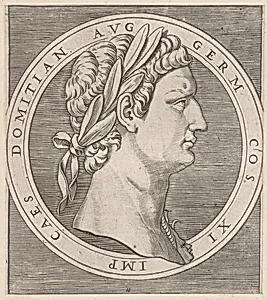
Speculum Romanae Magnificentiae: Domitian, from The Twelve Caesars
ca. 1500–1534
Medium
Engraving; second state of three
Dimensions
mount: 11 1/4 x 17 1/4 in. (28.6 x 43.8 cm) sheet: 6 11/16 x 5 7/8 in. (17 x 15 cm)
Classification
Prints
Department
Drawings and Prints
Museum
Metropolitan Museum of Art, New York, NY
Credit
Harris Brisbane Dick Fund, 1941
Accession Number
41.72(3.93)
Rights
Public Domain
Tags
Art Historical Context
Behold the commanding profile of Emperor Domitian in this exquisite engraving by Marcantonioondi, a cornerstone of Renaissance printmaking. Titled *Speculum Romanae Magnificent: Domitian, from Twelve Caesars*, this work dates to circa 1500–1534 and represents the second state of three showcasing subtle refinements in the printing process. Housed in the Metropolitan Museum of Art's Drawings and Prints department, captures the Roman ruler in the classical profile style, evoking ancient and busts that symbolized imperial power. Raimondi, a master engraver from Bologna, revolutionized the medium by translating the fluid grace of Raphael's designs into intricate copperplate lines. The *Speculum Romanae Magnificentiae*—or "Mirror of Roman Magnificence"—was a celebrated 16th-century anthology of over 600 prints depicting Rome's ancient wonders, from monuments to emperors. Produced during the High Renaissance, when artists and scholars avidly rediscovered classical antiquity, these affordable engravings democratized knowledge of Rome's grandeur, inspiring architects, painters, and antiquarians across Europe. This modest sheet (6 11/16 x 5 7/8 in.) belies its cultural weight: it fueled the revival of Roman portraiture and imperial iconography, bridging antiquity and the modern era. Visitors, imagine holding a piece of history that once hung in scholars' studies—timeless testimony to Rome's enduring majesty!
About the Artist
Marcantonio Raimondi · 1475–1534
Marcantonio Raimondi (c. 1480–1534), born near Bologna, Italy, emerged as one of the Renaissance's premier engravers, revolutionizing printmaking through his mastery of reproductive techniques. He trained in the workshop of the goldsmith, painter, and niellist Francesco Francia, whose influence is evident in his early engravings, such as the goldsmith-like shading in *Pyramus and Thisbe* (1505), h...