
Speculum Romanae Magnificentiae: The Colosseum
16th century
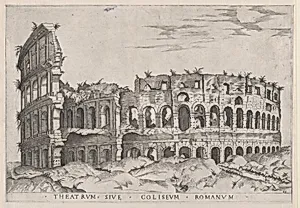
Medium
Engraving
Dimensions
mount: 13 3/16 x 13 3/8 in. (33.5 x 34 cm) sheet: 9 5/16 x 13 1/4 in. (23.6 x 33.7 cm)
Classification
Prints
Department
Drawings and Prints
Museum
Metropolitan Museum of Art, New York, NY
Credit
Harris Brisbane Dick Fund, 1941
Accession Number
41.72(1.58)
Rights
Public Domain
Tags
Art Historical Context
Step into the timeless allure of ancient Rome with *Speculum Romanae Magnificentiae: The Colosseum*, a captivating 16th-century engraving from an anonymous artist. Part of the famed *Speculum Romanae Magnificentiae*—a vast anthology of prints compiled by Antwerp publisher Antonio Lafreri—this work showcases the majestic Flavian Amphitheater, known as the Colosseum, amid its early ruins. During the Renaissance, such images served as visual catalogs of Rome's antiquities, inspiring artists, architects, and scholars to rediscover classical grandeur amid the city's decay. Crafted as an engraving on a modest sheet of 9 5/16 x 13 1/4 inches, this print exemplifies the precision of intaglio techniques, where intricate lines etched into a metal plate captured architectural details like arches and vaults with remarkable clarity. These affordable reproductions democratized access to Rome's wonders, fueling the era's fascination with ruins as symbols of imperial might and poignant reminders of time's passage. Today, housed in the Metropolitan Museum of Art's Drawings and Prints department (acquired through the Harris Brisbane Dick Fund in 1941), this piece invites us to ponder the Colosseum's legacy—from gladiatorial spectacles to a UNESCO icon—bridging 2,000 years of human achievement and endurance.
About the Artist
Anonymous
In the vast tapestry of art history, "Anonymous" stands not as a singular individual but as a collective designation for countless unidentified creators whose works have endured across millennia. These artists, spanning prehistoric cave painters to medieval illuminators and folk craftsmen, produced the foundational layers of human visual culture. Prior to the Renaissance, when individual fame emer...