
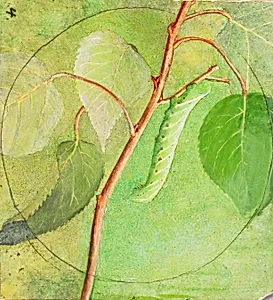
Sphinx Caterpillar, study for book Concealing Coloration in the Animal Kingdom
Medium
Painting
Classification
Painting
Department
Smithsonian Collection
Museum
Smithsonian American Art Museum
Credit
Smithsonian American Art Museum, Gift of the heirs of Abbott Handerson Thayer
Accession Number
1950.2.19B
Rights
Public Domain
Tags
Art Historical Context
Abbott Handerson Thayer *Sphinx Caterpillar, study for book Concealing Coloration in the Animal Kingdom is a captivating example of art meeting science. Created around the early 1900s as a preparatory painting, it showcases Thayer's fascination with how animals blend into their environments. Thayer, an American artist known for his luminous portraits and landscapes in the Symbolist tradition, turned his keen observational skills to natural history, co-authoring the influential 1909 book *Concealing Coloration in the Kingdom* with his son This watercolor study depicts a sphinx caterpillar—likely a hawk moth larva—mimicking a leaf, highlighting nature's masterful camouflage. The painting's artistic significance lies in its precise realism and subtle color gradients, techniques Thayer pioneered to demonstrate "countershading," where an animal's tones create an illusion of flatness against its backdrop. Far from mere illustration, it challenged prevailing ideas about warning coloration, arguing instead for protective mimicry. Thayer's work even influenced World War I military camouflage, bridging fine art with practical science. Housed in the Smithsonian American Art Museum through a gift from Thayer's heirs, this piece invites visitors to ponder the artistry in evolution. Gaze closely at the caterpillar's leaf-like form and marvel at how Thayer's brush revealed hidden wonders of the natural world.