
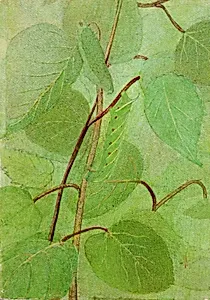
Sphinx Caterpillar, study for book Concealing Coloration in the Animal Kingdom
Medium
Painting
Classification
Painting
Department
Smithsonian Collection
Museum
Smithsonian American Art Museum
Credit
Smithsonian American Art Museum, Gift of the heirs of Abbott Handerson Thayer
Accession Number
1950.2.19A
Rights
Public Domain
Tags
Art Historical Context
Abbott Handerson Th's *Sphinx Caterpillar, study for book Concealing Coloration in the Animal Kingdom* (n.d.) is a captivating watercolor painting that exemplifies the artist's unique blend of fine art and natural science. Thayer, American painter influenced by Symbolism and Impressionism, became renowned for his pioneering theories on animal camouflage. This detailed study, now in the Smithsonian American Art Museum, created as preparatory work for his influential 1909 book co-authored with his son, Gerald, which argued that many animal patterns serve protective "concealing coloration" rather display. The artwork depicts a sphinx caterpillar ingeniously mimicking a leaf, showcasing Thayer's meticulous observation of nature's deceptive designs. Through delicate brushwork and subtle tonal shifts, he highlights how the insect's ridges, veins, and hues blend seamlessly with foliage, a concept that challenged prevailing ideas of warning coloration. Thayer's technique—rooted in his portraiture background—brings scientific precision to artistic realism, making the ordinary extraordinary. This piece holds historical significance beyond art: Thayer's ideas inspired military camouflage during World War I, influencing artists like those in the British camouflage unit. For visitors, it invites wonder at nature's artistry, reminding us how Thayer's gaze bridged galleries and wilds. (198 words)