
Spoon
1770–1800
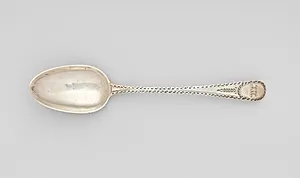
Medium
Silver
Dimensions
L. 8 5/8 in. (21.9 cm)
Classification
Spoon
Culture
American
Department
The American Wing
Museum
Metropolitan Museum of Art, New York, NY
Credit
Bequest of Alphonso T. Clearwater, 1933
Accession Number
33.120.401
Rights
Public Domain
Art Historical Context
This elegant silver spoon, crafted by the renowned American silversmith Paul Revere Jr. between 1770 and 1800, the finest traditions of colonial and early Federal-era metalwork. Measuring 8 5/8 inches in length, it reflects Revere's mastery as a Boston artisan during a pivotal time in American history—the lead-up to and aftermath of the Revolutionary War. Revere, celebrated for his "midnight ride" and patriotic fervor, produced silver objects that blended British influences with emerging American ingenuity, making them coveted heirlooms. Silver spoons like this one were more than utilitarian; they symbolized status and hospitality in prosperous households. Revere's technique involved hand-hammering sheet silver into precise forms, often with chased or engraved details that showcased his skill in creating durable yet refined pieces. Housed in The American Wing of the Metropolitan Museum of Art, thanks to the 1933 bequest of Alphonso T. Clearwater, this spoon offers a tangible link to everyday life in the young republic, highlighting how craftsmanship fueled national pride. (198 words)
About the Artist
Paul Revere Jr. · 1734–1818
Paul Revere Jr. (1734–1818), born in Boston's North End, was the son of French Huguenot silversmith Apollos Rivoire—also known as Paul Revere Sr.—and Deborah Hichborn, a member of a local artisan family. At age 13, he left school to apprentice under his father, mastering the intricate craft of silversmithing and engraving in the family shop, which he inherited upon his father's death in 1754. Reve...