
BK-18817
ca. 1828 - ca. 1905
Medium
clay
Dimensions
8; 24
Rights
Public Domain
About this artwork
Schenking van de heer E. Lacomblé
Art Historical Context
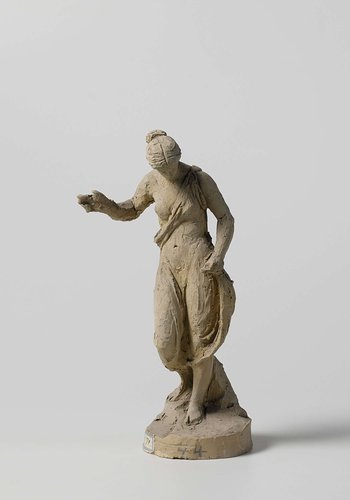
This intriguing clay sculpture, catalogued as BK-18817, was created by Belgian artist Eugène Lacomblé during his lifetime (ca. 1828–ca. 1905). Standing just 24 centimetres tall with an 8-centimetre diameter, the compact work demonstrates the intimate scale often favoured for clay studies or finished pieces intended for private appreciation. Its modest dimensions invite close inspection, highlighting the tactile qualities of the medium. The piece entered the museum collection as a gift from Mr. E. Lacomblé, underscoring the artist’s personal connection to the institution. Such donations were common in the nineteenth century, helping build public holdings of contemporary works and preserving examples of artists’ explorations in clay—an affordable, versatile material that allowed for both rapid modelling and detailed finishing. Lacomblé’s long career spanned a period of significant artistic experimentation across Europe. This small sculpture offers visitors a glimpse into the everyday creative practice of the era, where clay served as a bridge between preliminary ideas and more permanent materials like bronze or stone.
About the Artist
Eugène Lacomblé · 1828–1905
Eugène Lacomblé (1828–1905) was a versatile Belgian artist who worked primarily as a sculptor but also practiced painting, watercolor, drawing, and etching, embodying the nineteenth-century ideal of the multi-talented artist-craftsman. Born in Brussels and dying in Arnhem, Lacomblé's career spanned the second half of the nineteenth century, a period of significant artistic and social change in Eur...