
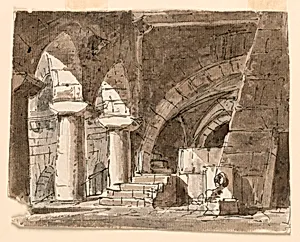
Stage Design, Court in Castle
early 19th century
Medium
theater
Classification
theater
Department
Smithsonian Collection
Museum
Smithsonian American Art Museum
Credit
Museum purchase through gift of various donors and from Eleanor G. Hewitt Fund
Accession Number
1938-88-388
Rights
Public Domain
About this artwork
Research in Progress
Art Historical Context
Step into the grandeur of an early 19-century theatrical world with *Stage Design, Court in Castle*, a captivating scenic rendering from the Smithsonian American Art's collection. Created by an unknown artist, this design evokes the opulent interior of a medieval castle court, complete with towering architecture, ornate details, and atmospheric depth that would have transformed stage performances into immersive spectacles. Acquired through museum purchases and generous donor gifts, including the Eleanor G. Hewitt, it highlights the Smithsonian's commitment to preserving ephemeral arts like theater design. In the early 1800s, as Romanticism swept European and American stages, elaborate backdrops like this one brought historical dramas, operas, and ballets to life. Painted likely in gouache or watercolor—a favored medium for its vibrant colors and quick-drying properties—these designs were blueprints for carpenters and painters, enabling rapid scene changes via innovative mechanisms like sliding flats and trapdoors. Though research continues to uncover its exact origins, it reflects the era's fascination with Gothic revival and chivalric tales. This piece invites us to ponder the behind-the-scenes magic of live theater, where a single design could transport audiences to imagined realms. A testament to collaborative artistry, it reminds visitors of theater's enduring role in shaping cultural narratives.
About the Artist
Unknown
The artist designated as "Unknown" in our virtual museum's collection exemplifies a poignant chapter in art history: creators whose identities have faded into obscurity despite the enduring power of their work. With only one known artwork attributed to them in our holdings, this figure represents countless anonymous hands that shaped visual culture across centuries. Museums worldwide, including th...