
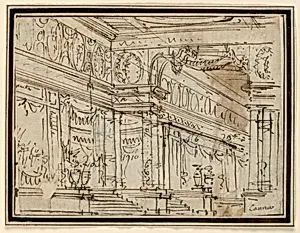
Stage Design: Palace Interior
early 18th century
Classification
Drawing
Department
Smithsonian Collection
Museum
Smithsonian American Art Museum
Credit
Museum purchase through gift of various donors and from Eleanor G. Hewitt Fund
Accession Number
1938-88-70
Rights
Public Domain
About this artwork
Research in Progress
Art Historical Context
**Stage Design: Palace Interior** Pasquale Canna, Italian artist active in the 18th century, a captivating glimpse into the theatrical world of Baroque-era Italy. This drawing, created around the dawn of the century, depicts an opulent palace interior crafted for the stage—likely intended for opera or dramatic productions that flourished in cities like Venice and Naples. Canna's work the era's scenographic tradition, where artists used intricate designs to transform theaters into immersive fantasy realms, blending architecture, illusion, and grandeur. As a preparatory drawing (medium details still under research), it highlights the technical precision required in stagecraft, employing linear perspective and decorative motifs to evoke lavish palaces. These designs were pivotal in Italy's vibrant opera culture, influencing performers, directors, and audiences alike. Though specifics of its production remain under study, the piece underscores the fusion of art and performance that defined 18th-century European entertainment. Now housed in the Smithsonian American Art Museum through a generous museum purchase and the Eleanor G. Hewitt Fund, this rarity bridges Italian theatrical heritage with American collections, inviting visitors to ponder the artistry behind the curtain.