
Stage Designs
1746–1809
Classification
architecture
Department
Smithsonian Collection
Museum
Smithsonian American Art Museum
Credit
Museum purchase through gift of various donors and from Eleanor G. Hewitt Fund
Accession Number
1938-88-1695
Rights
Public Domain
About this artwork
Research in Progress
Art Historical Context
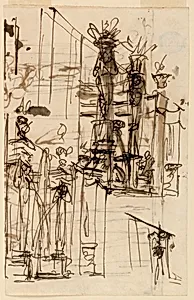
**Stage Designs by Giuseppe Barberi** Giuseppe Barber (1746–1809), an Italian architect active during the vibrant late Enlightenment era, created these *Stage Designs*, now housed in the Smithsonian American Art's collection. Acquired through museum purchase with support from various donors and the Eleanor G. Hewitt Fund the works are classified under architecture, highlighting Barberi's expertise in designing theatrical scenery. Though the medium remains unidentified amid ongoing research, such designs typically blended architectural precision with illusory perspectives to transform stages into grand, immersive worlds. In 18th-century Italy, stage designs were essential to the flourishing opera and theater scene, where architects like Barberi crafted elaborate backdrops that evoked palaces, gardens, and mythical realms. These creations not only supported dramatic performances but also showcased innovative techniques in spatial illusion and proportion, bridging architecture and the performing arts. Barberi's contributions reflect the era's neoclassical aspirations, emphasizing harmony and grandeur amid Rome's cultural renaissance. Today, these designs offer a window into historical spectacle, reminding visitors how architecture extended beyond buildings into ephemeral magic. As research progresses, they invite us to appreciate the artistry behind the curtain.