
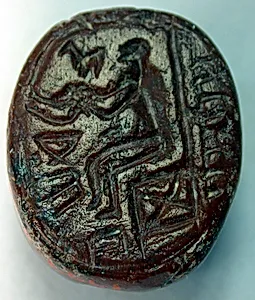
Stamp seal (ovoid) with deity (?)
Unknown Artist
9th–7th century BCE
Medium
Steatite
Dimensions
H. 13/16 in. (2 cm); Diam. 11/16 in. (1.7 cm)
Classification
Stone-Stamp Seals-Inscribed
Culture & Period
Canaanite (?) · Iron Age II
Department
Ancient Near Eastern Art
Museum
Metropolitan Museum of Art, New York, NY
Credit
Gift of Nanette B. Kelekian, in memory of Charles Dikran and Beatrice Kelekian, 1999
Accession Number
1999.325.175
Rights
Public Domain
Tags
Art Historical Context
This petite ovoid stamp seal, from steatite—a soft, soapstone-like material ideal for intricate engraving—dates to the Iron Age II (9th–7th century BCE) and hails from a Canaanite (?) culture in the Ancient Near East. Measuring just 13/16 inch high and 11/16 inch in diameter, it exemplifies the remarkable craftsmanship of small-scale artifacts designed for practical use. Likely featuring a deity (?), possibly rendered as a stylized human figure, and inscribed, it would have been rolled or stamped into clay to create impressions for sealing documents, goods, or containers—essential for trade, administration, and ownership in bustling ancient societies. Stamp seals like this one were ubiquitous in the Levant during the Iron Age, reflecting a world of emerging kingdoms, Phoenician trade networks, and religious devotion. The uncertain Canaanite attribution highlights the cultural blending in the region, where motifs of gods or protective figures symbolized power and divine favor. Its survival speaks to the enduring value of such portable talismans. Now in the Metropolitan Museum of Art's Ancient Near Eastern Art collection (gift of Nanette B. Kelekian, 1999), this seal offers a tangible glimpse into daily life and spirituality over 2,800 years ago, reminding us how even tiny objects carried immense cultural weight.