
Stand
ca. 1765
Medium
Soft-paste porcelain
Dimensions
Diameter: 8 1/4 in. (21 cm)
Classification
Ceramics-Porcelain
Culture
British, Chelsea
Department
European Sculpture and Decorative Arts
Museum
Metropolitan Museum of Art, New York, NY
Credit
Bequest of John L. Cadwalader, 1914
Accession Number
14.58.108c
Rights
Public Domain
Tags
Art Historical Context
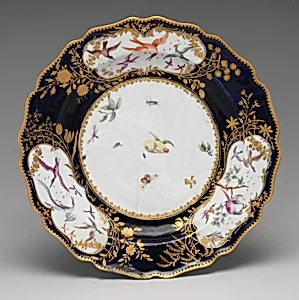
Step into the elegant world of 18th-century British porcelain with this charming *Stand* from the Chelsea Porcelain Manufactory created around 1765. Measuring 8¼ inches in diameter, this piece is crafted from soft-paste porcelain pioneering British innovation that mimicked the translucent glow of coveted Chinese hard-paste porcelain before true formulas were perfected. Produced in Chelsea, London, it exemplifies the manufactory's height of artistry during its Gold Anchor period, when pieces were marked with a raised anchor in gold for authenticity. Chelsea porcelain flourished from the 1740s to 1780s, rivaling elite European makers like Meissen and Sèvres. This stand, likely designed for a tabletop centerpiece or to support a candlestick or dish, features motifs inspired by nature—think vibrant birds, as hinted by its tags—painted with fine enamels over a creamy white body. These decorative objects graced the homes of the aristocracy, blending Rococo whimsy with technical prowess in molding and gilding. Today, this treasure resides in the Metropolitan Museum of Art's European Sculpture and Decorative Arts collection, thanks to the 1914 bequest of John L. Cadwalader. It whispers of Britain's porcelain obsession, a cultural bridge between Eastern imports and homegrown luxury, inviting us to admire the enduring sparkle of Georgian craftsmanship.
About the Artist
Chelsea Porcelain Manufactory · 1744–1784
**Chelsea Porcelain Manufactory** The Chelsea Porcelain Manufactory, Britain's pioneering porcelain enterprise, was founded around 1743 in Chelsea, London, by two Huguenot silversmiths: Nicholas Sprimont from Liège and Charles Gouyn. Sprimont, trained in Paris as a goldsmith before immigrating to England, brought his expertise in luxury metalwork to the venture, while Gouyn handled early sales th...