
Plate
ca. 1763
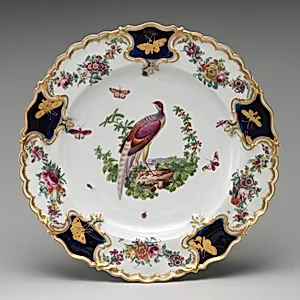
Medium
Soft-paste porcelain
Dimensions
Diameter: 9 in. (22.9 cm)
Classification
Ceramics-Porcelain
Culture
British, Chelsea
Department
European Sculpture and Decorative Arts
Museum
Metropolitan Museum of Art, New York, NY
Credit
Museum Accession
Accession Number
X.3.27
Rights
Public Domain
Tags
Art Historical Context
This elegant plate from the Chelsea Por Manufactory, circa 1763, exemplifies pinnacle of mid-18th-century British artistry. Produced at one of England's earliest porcelain factories in Chelsea, London, it measures 9 inches in diameter and crafted from soft-paste porcelain—a innovative European substitute for rare Chinese hard-paste porcelain. This medium, blending white clay with ground glass and fired at lower temperatures, allowed delicate translucency and intricate detailing, marking a key advancement in British manufacturing during the "porcelain fever" sweeping Europe. Adorned with vibrant depictions of pheasants, butterflies, and blooming flowers, the plate showcases the Rococo style's love for naturalistic motifs and playful asymmetry. Hand-painted enamels in rich blues, greens, and golds bring these elements to life, highlighting the manufactory's mastery of overglaze decoration techniques. Such designs not only served aesthetic purposes but also demonstrated the factory's technical prowess under royal patronage. As a piece of luxury tableware, this plate reflects the cultural prestige of porcelain in Georgian Britain, where it graced the dining tables of the elite. Housed in the Metropolitan Museum of Art's European Sculpture and Decorative Arts collection, it invites us to appreciate Chelsea's brief but brilliant legacy before the factory closed in 1769.
About the Artist
Chelsea Porcelain Manufactory · 1744–1784
**Chelsea Porcelain Manufactory** The Chelsea Porcelain Manufactory, Britain's pioneering porcelain enterprise, was founded around 1743 in Chelsea, London, by two Huguenot silversmiths: Nicholas Sprimont from Liège and Charles Gouyn. Sprimont, trained in Paris as a goldsmith before immigrating to England, brought his expertise in luxury metalwork to the venture, while Gouyn handled early sales th...