
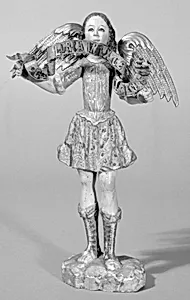
Standing angel
Unknown Artist
18th century
Medium
Wood (polychromed and gilded), silver and silver-gilt Eyes, glass
Dimensions
H. 10 in. (25.4 cm.)
Classification
Statuette
Culture
Ecuadoran
Department
The American Wing
Museum
Metropolitan Museum of Art, New York, NY
Credit
Gift of Loretta Hines Howard, 1964
Accession Number
64.164.234a–d
Rights
Public Domain
Tags
Art Historical Context
This exquisite *Standing Angel*, crafted by an unknown Ecuadoran in the 18th century, stands just 10 inches tall, the refined artistry of colonial Latin America. Carved from wood and adorned with vibrant polychrome painting, intricate gilding, silver, silver-gilt accents, the figure's lifelike glass eyes gaze serenely forward, inviting contemplation. These techniques—polromy for vivid realism, gilding and silver for heavenly radiance—were hallmarks of Baroque-influenced religious sculpture in Spanish colonial Ecuador, transforming humble wood a divine presence. Hailing from Ecuador during the height of colonial rule, the angel likely served in a church altar, procession, or private devotional setting, reflecting the fervent Catholicism that blended European traditions with indigenous craftsmanship. Its presence in The Metropolitan Museum of Art's American Wing, gifted by Loretta Hines Howard in 4, highlights the interconnected histories of the Americas, bridging continents through shared artistic heritage. Though the artist's name is lost to time, this small masterpiece captivates with its delicate poise and shimmering details, offering visitors a window into 18th-century spiritual life and the enduring allure of angelic iconography.