
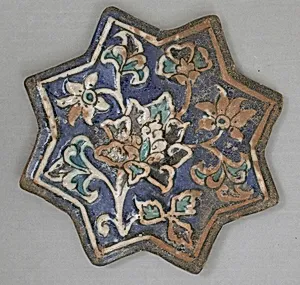
Star-Shaped Tile
Unknown Artist
first half 14th century
Medium
Stonepaste; molded and underglaze painted
Dimensions
W. 7 3/4 in. (19.7 cm wide)
Classification
Ceramics-Tiles
Department
Islamic Art
Museum
Metropolitan Museum of Art, New York, NY
Credit
Rogers Fund, 1908
Accession Number
08.110.14
Rights
Public Domain
Tags
Art Historical Context
This exquisite star-shaped tile, crafted by an unknown artist in the half of the 14 century, exemplifies the pinnacle of Islamic ceramic artistry. Housed in the Metropolitan Museum of Art's Department of Islamic Art (acquired through the Rogers Fund in 8), it measures 7 3/4 inches wide features delicate floral motifs, a hallmark of the period's decorative elegance. Such tiles were integral to architectural splendor, often adorning mosques, madrasas, and palaces across the Islamic world, from Iran to the Levant. Made from stonepaste—a composite of quartz, clay, and frit developed by Islamic potters to mimic Chinese porcelain—the tile was molded into its radiant star form and painted with underglaze colors before firing. This technique ensured vibrant, durable hues that wouldn't fade under sunlight or touch, allowing intricate patterns to shine through a glossy transparent glaze. The star shape, symbolizing celestial harmony, interlocked with others to form mesmerizing geometric mosaics, reflecting Islamic principles of infinity and divine order. Though its exact provenance remains a mystery, this tile captures the cultural zenith of the Ilkhanid era, blending technical innovation with poetic floral symbolism. Visitors, imagine it twinkling amid a vast dome— a timeless bloom frozen in stonepaste brilliance.