
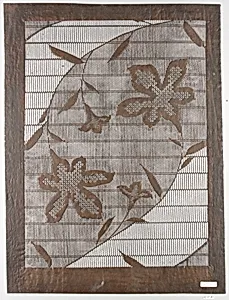
Stencil
Unknown Artist
19th century
Medium
Paper, silk
Dimensions
22 1/4 x 16 7/8 in. (56.5 x 42.9 cm)
Classification
Stencils
Culture
Japan
Department
Asian Art
Museum
Metropolitan Museum of Art, New York, NY
Credit
Gift of Mrs. Horace Havemeyer, 1942
Accession Number
42.91.40
Rights
Public Domain
Tags
Art Historical Context
This exquisite 19th-century Japanese, crafted from layered paper and silk, measures 22¼ x 16⅞ inches and exemplifies the intricate artistry of katagami, traditional stencils used in textile dyeing. Housed in the Metropolitan Museum of Art's Asian Department as a gift from Mrs. Horaceemeyer in 1942, its delicate leaf motifs—evident from the design tags—reflect Japan's profound appreciation for nature's fleeting beauty, a hallmark of Edo-period (1603–1868) and Meiji aesthetics. Katagami stencils were essential tools for katazome, a resist-dyeing technique where rice paste applied through the stencil prevented color absorption on silk fabrics like kimonos. Artisans meticulously cut patterns using tiny knives, often reinforcing thin paper with silk threads for durability during repeated use. This medium's genius lies in its precision: a single stencil could produce hundreds of identical yet subtly varied prints, blending functionality with artistic finesse. As a window into everyday Japanese craftsmanship, this anonymous work highlights how common tools embodied cultural values of harmony and impermanence. Visitors will appreciate its tactile fragility, a testament to the skilled hands that once brought floral visions to vibrant life on garments worn in festivals and daily life.