
Stomacher
19th century
Medium
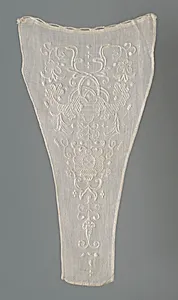
Linen, plain weave; embroidered with linen yarns in buttonhole, chain, cross, crossed back, half cross, marking cross, satin, single satin, and stem stitches; attached cord of 8-strand 4-sided braid
Dimensions
29.5 × 14.9 cm (11 5/8 × 5 7/8 in.)
Classification
textile
Department
Textiles
Museum
Art Institute of Chicago
Accession Number
110421
Rights
Public Domain
Art Historical Context
This exquisite 19th-century stom, a triangular decorative panel worn by women to adorn the front of a bodice, showcases the artistry of anonymous needleworkers from the Art Institute of Chicago Textiles collection. Measuring just 29.5 × 14.9 cm, it reflects the enduring tradition of embroidered fashion accessories, which peaked in earlier centuries but persisted into the1800s through homemade or bespoke creations. Such pieces were prized for their ability to elevate everyday attire, blending functionality with personal expression during an era when domestic needlework was a hallmark of feminine accomplishment. Crafted from plain-weave linen and embroidered with fine linen yarns, the stomacher employs an impressive array of stitches—including buttonhole, chain, cross, satin, and stem—for intricate patterns that demonstrate masterful control and versatility. A attached cord of 8-strand 4-sided braid adds textural depth, highlighting advanced braiding techniques. These methods not only ensured durability but also allowed for rich, dimensional designs, underscoring embroidery's role as both practical craft and fine art. As a textile artifact, this stomacher offers a window into 19th-century material culture, where such items symbolized status, skill, and cultural continuity. Visitors can appreciate how it preserves the tactile legacy of hands that wove beauty into daily life.
About the Artist
Unknown
The artist designated as "Unknown" in our virtual museum's collection exemplifies a poignant chapter in art history: creators whose identities have faded into obscurity despite the enduring power of their work. With only one known artwork attributed to them in our holdings, this figure represents countless anonymous hands that shaped visual culture across centuries. Museums worldwide, including th...