
Sword Guard (Tsuba)
Unknown Artist
ca. 1800
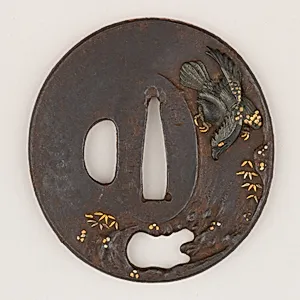
Medium
Iron, copper-gold alloy (shakudō), copper-silver alloy (shibuichi), gold, bronze, copper
Dimensions
H. 2 3/4 in. (7 cm); W. 2 9/16 in. (6.5 cm); thickness 3/16 in. (0.5 cm); Wt. 3.1 oz. (87.9 g)
Classification
Sword Furniture-Tsuba
Culture
Japanese
Department
Arms and Armor
Museum
Metropolitan Museum of Art, New York, NY
Credit
Rogers Fund, 1912
Accession Number
12.37.176
Rights
Public Domain
Tags
Art Historical Context
This exquisite *Sword Guard (Tsuba)*, crafted around 1800 during Japan's Edo period, served as a vital component of the katana sword, protecting the hand while showcasing the wearer's status. Tsuba were far more than functional; they embodied the samurai's refined aesthetic, blending utility with artistry in the hands of skilled metalworkers. Produced in an era of relative peace, when swordsmanship symbolized cultural prestige over battlefield use, this piece reflects the height of Japanese sword furniture craftsmanship. Fashioned primarily from iron, the tsuba features intricate inlays of shakudō (a copper-gold alloy with a dark patina), shibuichi (copper-silver for subtle grays), gold, bronze, and copper. These mixed-metal techniques, known as *zōgan* or damascening, allowed artisans to create vibrant, textured motifs—here evoking birds in flight, a common symbol of freedom and nature's harmony in Japanese art. Measuring just 2¾ inches high and weighing a mere 3.1 ounces, its compact form highlights the precision required for such detailed work. Acquired through the Rogers Fund in 1912 and now housed in the Metropolitan Museum of Art's Arms and Armor Department, this tsuba invites visitors to appreciate Japan's legacy of metallurgical innovation and poetic design, where even a warrior's tool became a canvas for beauty.