
Sword Guard (Tsuba)
Unknown Artist
ca. 1615–1868
Medium
Iron, silver, gold, copper
Dimensions
H. 3 in. (7.6 cm); W. 2 7/8 in. (7.3 cm); thickness 5/16 in. (0.8 cm); Wt. 4.5 oz. (127.6 g)
Classification
Sword Furniture-Tsuba
Culture
Japanese
Department
Arms and Armor
Museum
Metropolitan Museum of Art, New York, NY
Credit
H. O. Havemeyer Collection, Bequest of Mrs. H. O. Havemeyer, 1929
Accession Number
29.100.963
Rights
Public Domain
Tags
Art Historical Context
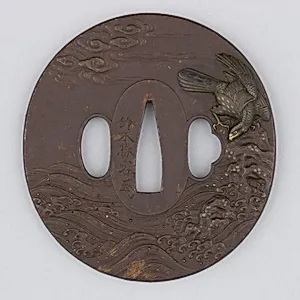
This exquisite **Sword Guard (Tsub)** hails from Japan's Edo period (ca.1615–1868), a time of relative peace when samurai culture flourished through refined artistry rather than battlefield prowess. As a vital component of the katana sword mount, the tsuba served a practical purpose—shielding the hand from an opponent's blade—while doubling as a canvas for personal expression. Crafted by an unknown master, it exemplifies the era's metalworking mastery, blending functionality with aesthetic splendor in the Arms and Armor tradition. Forged from iron and inlaid with shimmering silver, gold, and copper, the tsuba showcases sophisticated techniques like nunome-zogan (hammered-in metal inlays) to depict birds—a motif symbolizing freedom, grace, and seasonal harmony in Japanese art. Measuring just 3 inches high, its delicate openwork and precious overlays transformed a utilitarian guard into a wearable jewel, often customized to reflect the owner's taste or status. Weighing a substantial 4.5 ounces, it balanced durability with elegance. Now part of the Metropolitan Museum of Art's H. O. Havemeyer Collection (1929 bequest), this tsuba invites us to appreciate how Japanese artisans elevated everyday armor into timeless poetry, bridging warrior heritage and artistic innovation.