
Sword Guard (Tsuba)
Unknown Artist
ca. 1615–1868
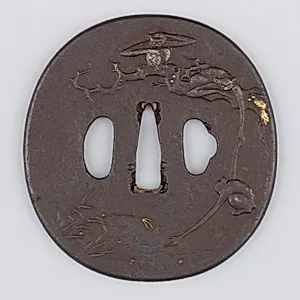
Medium
Iron, copper
Dimensions
H. 3 9/16 in. (9 cm); W. 3 3/8 in. (8.6 cm); thickness 1/4 in. (0.6 cm); Wt. 6.5 oz. (184.3 g)
Classification
Sword Furniture-Tsuba
Culture
Japanese
Department
Arms and Armor
Museum
Metropolitan Museum of Art, New York, NY
Credit
Gift of Bashford Dean, 1919
Accession Number
19.154.113
Rights
Public Domain
Tags
Art Historical Context
This finely crafted **Sword Guard (Tsub)** hails from Japan's Edo period (ca. 1615–1868), a time when samurai culture reached its artistic zenith. As the hand guard on a katana or wakizashi sword, thesuba served a practical purpose—preventing the user's hand from slipping onto the blade—while evolving into a canvas for exquisite metalwork. Produced by an unknown artisan, this piece exemplifies the era's tsuba makers, who transformed functional armor into wearable art, often traded among collectors like Bashford Dean, whose 1919 gift brought it to the Metropolitan Museum of Art. Forged from iron with copper accents, the tsuba measures about 3½ inches across and weighs a substantial 6.5 ounces, underscoring its robust yet elegant design. Its motif of monkeys—lively and mischievous—reflects Japanese artistic traditions where animals symbolized wit, nature's harmony, or folklore wisdom, such as the famous "see no evil" trio. Techniques like piercing (openwork) and inlay likely animate the scene, allowing light to play through the design and highlighting the smith's mastery of patination and texture. In the Arms and Armor department, this tsuba invites us to appreciate how Japanese sword furniture blended utility, spirituality, and aesthetics, bridging warrior life with poetic expression. A true gem for any visitor! (198 words)