
Sword Guard (Tsuba)
Unknown Artist
18th century
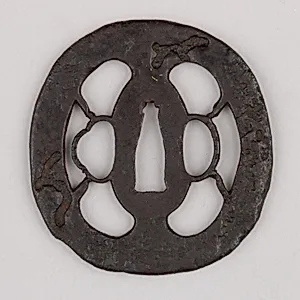
Medium
Iron, gold, copper
Dimensions
Diam. 3 1/4 in. (8.3 cm); thickness 3/16 in. (0.5 cm); Wt. 3.7 oz. (104.9 g)
Classification
Sword Furniture-Tsuba
Culture
Japanese
Department
Arms and Armor
Museum
Metropolitan Museum of Art, New York, NY
Credit
Funds from various donors, 1946
Accession Number
46.122.11
Rights
Public Domain
Art Historical Context
This exquisite *Sword Guard (Tsub)* from 18th-century Japan exemplifies the masterful metalwork of the Edo period, when samurai swords evolved from battlefield weapons into symbols of refined artistry and social status. As a key component of the sword's hilt (koshirae), the tsuba served a practical purpose—shielding the hand from an opponent's blade—while doubling as a canvas for elaborate decoration. Crafted by an unknown artisan, its circular form (3 1/4 inches in diameter) fits seamlessly into the katana or wakizashi, blending functionality with aesthetic grace. Forged primarily from iron, the guard is enriched with gold and copper, likely through sophisticated inlay techniques like zogan, which allowed artisans to create shimmering contrasts and intricate motifs. These materials not only enhanced durability—evident in its sturdy 3/16-inch thickness and 3.7-ounce weight—but also conveyed the owner's wealth and taste. During the peaceful Edo era, tsuba makers competed in guilds, pushing boundaries of design from naturalistic scenes to abstract patterns, making these fittings coveted collector's items. Acquired by the Metropolitan Museum of Art in 1946 through donor funds, this tsuba invites visitors to appreciate Japan's fusion of martial tradition and decorative arts, a testament to the samurai's enduring cultural legacy.