
Sword Guard (Tsuba)
Unknown Artist
early 17th century
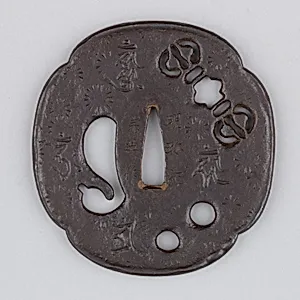
Medium
Iron, copper
Dimensions
H. 3 1/2 in. (8.9 cm); W. 3 3/8 in. (8.6 cm); thickness 1/4 in. (0.6 cm); Wt. 5.9 oz. (167.3 g)
Classification
Sword Furniture-Tsuba
Culture
Japanese
Department
Arms and Armor
Museum
Metropolitan Museum of Art, New York, NY
Credit
The Howard Mansfield Collection, Gift of Howard Mansfield, 1936
Accession Number
36.120.87
Rights
Public Domain
Art Historical Context
This exquisite sword guard, or *tsuba*, hails from early 17th-century Japan during the dawn of the Edo period (1603–1868). As a key component of a samurai's katana, the tsuba served a dual purpose: protecting the from the blade while acting as a canvas for artistic expression. Crafted when Japan enjoyed relative peace under the Tokugawa shog, such fittings evolved from purely functional into symbols of refinement and, often adorning the swords of warriors and nobility alike. Forged primarily from iron with copper accents, this tsuba exemplifies masterful metalworking techniques of the era. The iron provides durability and a dark, matte patina, while copper inlays or overlays add subtle color and contrast, highlighting the artisan's skill in piercing, hammering, and patination. Measuring just 3½ by 3⅜ inches and weighing under 6 ounces, its compact form balanced practicality with aesthetic appeal, allowing for intricate openwork designs that played with light and shadow. Now part of the Metropolitan Museum of Art's Arms and Armor collection—thanks to the Howard Mansfield gift of 1936—this anonymous masterpiece invites us to appreciate Japan's fusion of utility and beauty. Though its specific motif remains a mystery, it whispers of a culture where even weapons bore the poetry of craftsmanship.