
Sword Guard (Tsuba)
Unknown Artist
1858
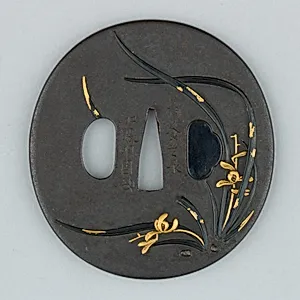
Medium
Iron, copper-gold alloy (shakudō), gold, copper
Dimensions
H. 3 1/8 in. (7.9 cm); W. 2 7/8 in. (7.3 cm); thickness 1/4 in. (0.6 cm); Wt. 5.1 oz. (144.6 g)
Classification
Sword Furniture-Tsuba
Culture
Japanese
Department
Arms and Armor
Museum
Metropolitan Museum of Art, New York, NY
Credit
The Howard Mansfield Collection, Gift of Howard Mansfield, 1936
Accession Number
36.120.2
Rights
Public Domain
Tags
Art Historical Context
This exquisite sword guard, or *tsuba*, hails from Japan in 1858, during the final years of the Edo period when samurai culture still flourished amid growing Western influences. As a crucial component of the katana mount, the tsuba protected the while adding aesthetic flair. Crafted at 3 1/8 inches high and weighing a substantial 5.1 ounces, it exemplifies the meticulous sword furniture that elevated weaponry to wearable art. Forged primarily from iron, the tsuba is enriched with shakudō—a copper-gold alloy prized for its deep black patina—alongside gold and copper inlays. These materials allowed artisans to create intricate designs, often through piercing (openwork) and damascening techniques, highlighting the mastery of metalworking in late Edo Japan. The plant motifs, suggested by its thematic tags, evoke nature's enduring symbolism in Japanese art, representing growth, resilience, or seasonal beauty. Part of the Metropolitan Museum of Art's Arms and Armor Department, this piece entered the collection in 1936 via the Howard Mansfield gift. It offers visitors a tangible link to Japan's warrior heritage, where functionality met poetic artistry in objects both practical and profound.