
Sword Guard (Tsuba)
Unknown Artist
18th century
Medium
Iron, copper, gold, silver
Dimensions
H. 3 3/16 in. (8.1 cm); W. 3 in. (7.6 cm); thickness 1/4 in. (0.6 cm); Wt. 4.3 oz. (121.9 g)
Classification
Sword Furniture-Tsuba
Culture
Japanese
Department
Arms and Armor
Museum
Metropolitan Museum of Art, New York, NY
Credit
Gift of Bashford Dean, 1919
Accession Number
19.154.8
Rights
Public Domain
Tags
Art Historical Context
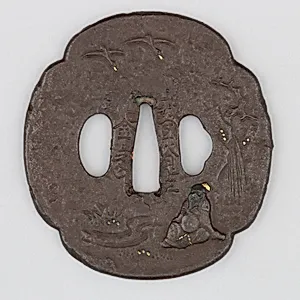
This exquisite 18th-century Japanese guard, or *tsuba*, served as a protective handguard on a katana or wakizashi, blending functionality with artistry during Japan's Edo period. Crafted samurai warriors, *tsuba* evolved from practical armor components into coveted art objects, symbolizing status and refined taste. Donated to the Metropolitan Museum of Art 1919 by collector Bashford Dean, this piece exemplifies the era's mastery in arms and armor design. Forged from iron and inlaid with shimmering copper, gold, and silver, the *tsuba* measures just over 3 inches across, weighing a substantial 4.3 ounces for its size. Artisans likely employed intricate techniques like nunome-zogan—hammering precious metals into etched iron surfaces—to depict scenes of birds and men, evoking harmony between nature and humanity. These motifs, common in Japanese decorative arts, might symbolize longevity, freedom, or human endeavor, inviting contemplation amid the sword's lethal purpose. As a highlight in the Met's Arms and Armor collection, this *tsuba* reveals how Edo craftsmen transformed weapons into wearable sculptures, bridging utility and beauty in samurai culture. Visitors, marvel at the delicate openwork and gleaming inlays that have endured for centuries!