
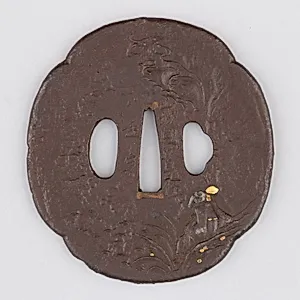
Sword Guard (Tsuba)
Unknown Artist
ca. 1615–1868
Medium
Iron, copper
Dimensions
H. 3 7/16 in. (8.7 cm); W. 3 3/16 in. (8.1 cm); thickness 1/4 in. (0.6 cm); Wt. 5.5 oz. (155.9 g)
Classification
Sword Furniture-Tsuba
Culture
Japanese
Department
Arms and Armor
Museum
Metropolitan Museum of Art, New York, NY
Credit
Gift of Bashford Dean, 1919
Accession Number
19.154.101
Rights
Public Domain
Tags
Art Historical Context
This elegant **Sword Guard (Tsub)** hails from Japan's Edo period (ca. 1615–1868), a time of relative peace under the Tokug shogunate when samurai culture thrived. Crafted for katana or wakizashi, the tsuba served a practical purpose—shielding the wielder's hand from an opponent's blade—while doubling as a canvas for artistry. Made of iron with copper accents, it measures a compact 3 7/16 x 3 3/16 inches, weighing just 5.5 ounces, perfect for balancing a warrior's weapon. Artisans employed sophisticated metalworking techniques, such as forging iron for durability and inlaying or overlaying copper for decorative contrast. Though the design details are not specified, tsuba from this era often featured intricate motifs symbolizing strength, nature, or mythology, transforming functional armor into wearable sculpture. Its robust 1/4-inch thickness underscores both utility and the smith's mastery. A gift to the Metropolitan Museum of Art from Bashford Dean in 1919, this anonymous masterpiece highlights Japan's fusion of martial prowess and aesthetic refinement. In samurai society, such guards were status symbols, worn openly to display wealth and taste—reminding us that even in battle, beauty had its place.