
Sword Guard (Tsuba)
Unknown Artist
ca. 1615–1868
Medium
Iron, copper
Dimensions
H. 3 3/8 in. (8.6 cm); W. 3 1/4 in. (8.3 cm); thickness 3/16 in. (0.5 cm); Wt. 5.5 oz. (155.9 g)
Classification
Sword Furniture-Tsuba
Culture
Japanese
Department
Arms and Armor
Museum
Metropolitan Museum of Art, New York, NY
Credit
Gift of Bashford Dean, 1919
Accession Number
19.154.60
Rights
Public Domain
Tags
Art Historical Context
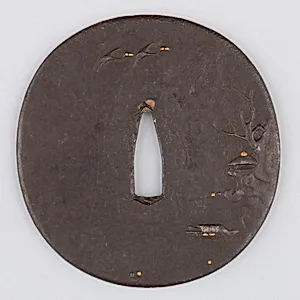
This exquisite *tsuba*, or sword guard, hails from Japan's Edo period (ca. 1615–1868), a time of relative peace when samurai culture emphasized artistry over warfare. Crafted from iron with copper accents, served a practical purpose: protecting the hand wielding a katana while doubling as a canvas for personal expression. Measuring just 3⅜ inches high, its compact form belies the skill required to forge such functional beauty, weighing a substantial 5.5 ounces for balance on the blade. The design features delicate motifs of geese and boats, likely rendered through piercing and inlay techniques common in tsuba-making. Geese evoke seasonal migration and poetic themes in Japanese art, while boats suggest journeys across water—symbols of transience cherished in Edo-era aesthetics. These openwork patterns not only lightened the guard but showcased the artisan's mastery of metalwork, blending utility with Zen-inspired elegance. A gift to the Metropolitan Museum of Art from Bashford Dean in 1919, this unsigned piece exemplifies how sword fittings became coveted collector's items, reflecting Japan's rich tradition of arms as wearable sculpture. Visitors, imagine it gleaming on a samurai's hilt during a cherry blossom viewing!