
Sword Guard (Tsuba)
Unknown Artist
ca. 1615–1868
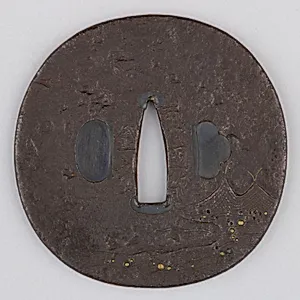
Medium
Iron, copper
Dimensions
Diam. 2 15/16 in. (7.5 cm); thickness 3/16 in. (0.5 cm); Wt. 5 oz. (141.7 g)
Classification
Sword Furniture-Tsuba
Culture
Japanese
Department
Arms and Armor
Museum
Metropolitan Museum of Art, New York, NY
Credit
Gift of Bashford Dean, 1919
Accession Number
19.154.89
Rights
Public Domain
Art Historical Context
This exquisite **Sword Guard (Tsub)** hails from Japan's Edo period (ca. 1615–1868), a time of relative peace when samurai culture shifted from battlefield prowess to refined artistry. Crafted by an unknown master, the tsuba served as the handguard on a katana wakizashi sword, protecting the wielder's hand while adding balance and aesthetic appeal. Its iron body, inlaid or alloyed with copper, exemplifies period's metallurgical expertise, where forges produced durable yet intricately worked pieces. Tsuba were far more than functional; they were miniature sculptures symbolizing status and philosophical ideals. Common motifs—though not specified here—drew from nature, mythology, or daily life, often pierced (openwork) or patinated for visual depth. At 2 15/16 inches in diameter and weighing 5 ounces, this example reflects the precision of tsuba-shi artisans, who elevated sword fittings to high art. A gift to the Metropolitan Museum of Art from collector Bashford Dean in 1919, this tsuba invites us to ponder the samurai's dual world of warrior and aesthete, bridging utility and beauty in Japanese arms and armor tradition.