
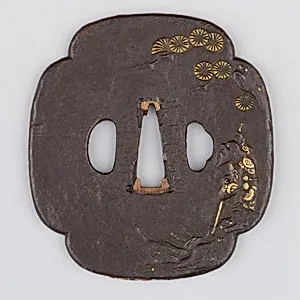
Sword Guard (Tsuba)
Unknown Artist
ca. 1615–1868
Medium
Iron, copper
Dimensions
H. 3 3/8 in. (8.6 cm); W. 3 1/8 in. (7.9 cm); thickness 3/16 in. (0.5 cm); Wt. 5.2 oz. (147.4 g)
Classification
Sword Furniture-Tsuba
Culture
Japanese
Department
Arms and Armor
Museum
Metropolitan Museum of Art, New York, NY
Credit
Gift of Bashford Dean, 1919
Accession Number
19.154.87
Rights
Public Domain
Tags
Art Historical Context
This elegant *Sword Guard (Tsuba)*, crafted in iron and copper around 1615–1868 during Japan's Edo period, served as a vital component of the samurai sword (katana). Positioned between the blade and hilt, the tsuba protected the hand from slipping while adding aesthetic flair. Spanning the Tokugawa shogunate era—a time of relative peace when samurai culture flourished—these guards evolved from purely functional pieces into miniature masterpieces, blending utility with artistry. Made from durable iron with copper accents, this tsuba measures just 3⅜ by 3⅛ inches, yet exemplifies the extraordinary metalworking skills of Japanese artisans. Techniques like piercing (openwork) and inlay often adorned tsuba with motifs symbolizing strength, nature, or mythology, reflecting Zen influences and the warrior ethos. Though the artist's identity is unknown, such objects were prized possessions, denoting status among samurai and later collectors. A gift to the Metropolitan Museum of Art from Bashford Dean in 1919, this piece now resides in the Arms and Armor Department, inviting visitors to appreciate how Japanese sword furniture transformed weapons into wearable art. Weighing a substantial 5.2 ounces, it whispers tales of bushido honor and meticulous craftsmanship.