
Sword Guard (Tsuba)
Unknown Artist
ca. 1615–1868
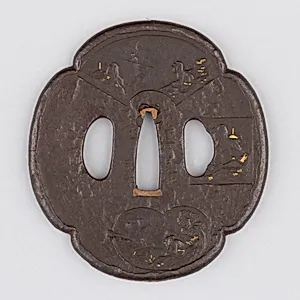
Medium
Iron, copper
Dimensions
H. 3 3/8 in. (8.6 cm); W. 3 1/8 in. (7.9 cm); thickness 1/4 in. (0.6 cm); Wt. 5.2 oz. (147.4 g)
Classification
Sword Furniture-Tsuba
Culture
Japanese
Department
Arms and Armor
Museum
Metropolitan Museum of Art, New York, NY
Credit
Gift of Bashford Dean, 1919
Accession Number
19.154.94
Rights
Public Domain
Tags
Art Historical Context
This exquisite **Sword Guard (Tsub)**, crafted in iron with copper accents around 1615–1868, hails from Japan's Edo period—a time of relative peace when samurai culture flourished, and sword fittings evolved from mere protection into finely wrought art. As part of a katana's hilt assembly, the tsuba served a dual purpose: shielding the hand from an opponent's blade while showcasing the owner's taste and status. Measuring just 3⅜ by 3⅛ inches, its compact form belies its masterful construction, weighing a substantial 5.2 ounces for balanced handling. Japanese tsuba makers during the Edo era pioneered techniques like piercing (openwork), hammering, and inlaying softer metals like copper into iron for shimmering contrasts and symbolic motifs—often drawn from nature, mythology, or daily life. Though the artist's identity is lost to time, this piece exemplifies the era's school traditions, where functionality met aesthetic refinement. Gifted to the Metropolitan Museum of Art in 1919 by collector Bashford Dean, it now resides in the Arms and Armor Department, inviting us to appreciate how these "sword furniture" pieces blurred the line between weapon and wearable sculpture. In Japanese culture, tsuba were heirlooms symbolizing heritage, their designs whispering stories of valor amid centuries of craftsmanship. A true gem for any visitor! (198 words)