
Sword Guard (Tsuba)
Unknown Artist
ca. 1615–1868
Medium
Iron, copper
Dimensions
H. 2 5/8 in. (6.7 cm); W. 2 7/16 in. (6.2 cm); thickness 3/16 in. (0.5 cm); Wt. 3 oz. (85 g)
Classification
Sword Furniture-Tsuba
Culture
Japanese
Department
Arms and Armor
Museum
Metropolitan Museum of Art, New York, NY
Credit
Gift of Bashford Dean, 1919
Accession Number
19.154.104
Rights
Public Domain
Tags
Art Historical Context
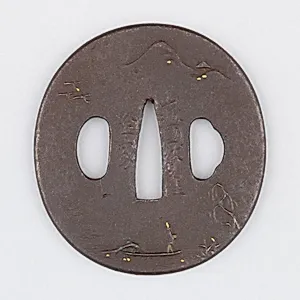
This exquisite **Sword Guard (Tsub)**, crafted in iron inlaid with copper, hails from Japan during the Edo period (. 1615–1868), a time of relative peace under the Tokug shogunate when samurai culture emphasized artistry alongside martial tradition. Measuring just 2⅝ × 2⁷⁄₁₆ inches, this compact yet robust piece served a dual purpose: protecting the swordsman's hand from the blade while adorning the katana or wakizashi as part of the sword mounting (koshirae). Tsuba like this evolved from functional guards into miniature sculptures, showcasing the era's mastery of metalwork. The design evokes a serene landscape with birds soaring amid mountains and boats gliding on water—motifs symbolizing harmony with nature and the transient beauty of life, core themes in Japanese aesthetics. Artisans likely employed piercing (tekkō) and inlay techniques to create intricate openwork, allowing light to play through the motifs and highlighting the contrast between the dark iron and shimmering copper. Such details reflect the high level of craftsmanship among specialized tsuba makers, though this one's artist remains unknown. A gift to the Metropolitan Museum of Art from collector Bashford Dean in 1919, this tsuba captures the poetic elegance of Edo-period arms and armor, blending utility with artistry for visitors to admire today.