
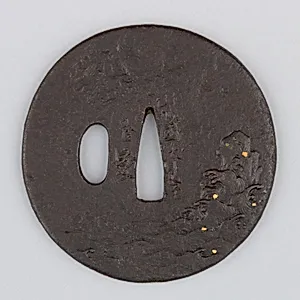
Sword Guard (Tsuba)
Unknown Artist
ca. 1615–1868
Medium
Iron, copper
Dimensions
Diam. 2 15/16 in. (7.5 cm); thickness 3/16 in. (0.5 cm); Wt. 4.2 oz. (119.1 g)
Classification
Sword Furniture-Tsuba
Culture
Japanese
Department
Arms and Armor
Museum
Metropolitan Museum of Art, New York, NY
Credit
Gift of Bashford Dean, 1919
Accession Number
19.154.52
Rights
Public Domain
Art Historical Context
This exquisite *tsuba*, or sword guard, hails from Japan's Edo period (ca. 1615–1868), a time of relative peace when samurai refined their artistry in sword fittings. Positioned between the blade and handle of a katana, the tsuba served a dual purpose: protecting theder's hand from slipping onto the sharp edge while transforming the weapon into a canvas for personal expression. Crafted anonymously, as was common for these masterworks, it exemplifies the era's metalworking prowess, blending functionality with subtle elegance. Forged from iron with copper accents, the guard measures just 2 15/16 inches in diameter and weighs a substantial 4.2 ounces, underscoring its robust yet refined construction. Japanese artisans employed techniques like piercing, inlaying, and patination to create intricate designs—often depicting nature, myths, or proverbs—that reflected the owner's status and philosophy. Though the specific motif here remains unnoted, such pieces elevated arms and armor from mere tools of war to treasured art objects. A generous gift from Bashford Dean in 1919, this tsuba now graces the Metropolitan Museum of Art's Arms and Armor Department. It invites visitors to ponder the samurai's world, where beauty and battle intertwined seamlessly.