
Sword Guard (Tsuba)
Unknown Artist
ca. 1615–1868
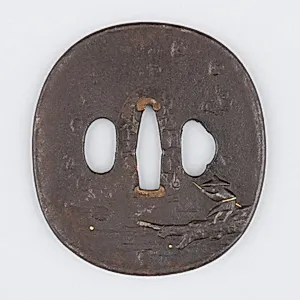
Medium
Iron, copper
Dimensions
H. 3 1/4 in. (8.3 cm); W. 3 in. (7.6 cm); thickness 3/16 in. (0.5 cm); Wt. 4.4 oz. (124.7 g)
Classification
Sword Furniture-Tsuba
Culture
Japanese
Department
Arms and Armor
Museum
Metropolitan Museum of Art, New York, NY
Credit
Gift of Bashford Dean, 1919
Accession Number
19.154.45
Rights
Public Domain
Tags
Art Historical Context
This exquisite **Sword Guard (Tsuba)**, crafted in Japan during the Edo period (ca. 1615–1868), served as a vital component of the katana sword, protecting the wielder's hand while adding aesthetic flair. Though the artist remains unknown, tsuba from this era exemplify the pinnacle of Japanese metalworking artistry, transforming functional armor into miniature sculptures. Measuring just 3¼ inches high and wide, this iron piece inlaid with copper reflects the period's emphasis on refined craftsmanship amid relative peace, when samurai culture evolved from battlefield utility to symbols of status and connoisseurship. Artisans employed sophisticated techniques like piercing, chiseling, and inlaying softer metals such as copper into a hardened iron base, creating durable yet intricately detailed guards often adorned with motifs from nature, mythology, or daily life. The modest thickness of 3/16 inch and weight of 4.4 ounces highlight the balance of form and function prized in sword furniture. Tsuba were not mere accessories but expressions of the owner's taste, traded among collectors and even detached for appreciation. A generous gift from Bashford Dean to the Metropolitan Museum of Art in 1919, this tsuba invites visitors to ponder the artistry hidden in arms and armor, bridging Japan's warrior heritage with its enduring love of beauty.