
Sword Guard (Tsuba)
Unknown Artist
ca. 1615–1868
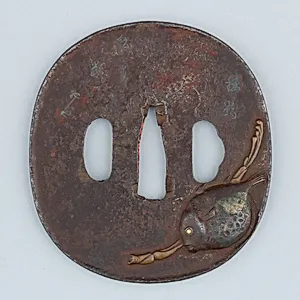
Medium
Iron, silver, pewter, copper
Dimensions
H. 3 3/16 in. (8.1 cm); W. 2 15/16 in. (7.5 cm); thickness 5/16 in. (0.8 cm); Wt. 4.4. oz. (124.7 g)
Classification
Sword Furniture-Tsuba
Culture
Japanese
Department
Arms and Armor
Museum
Metropolitan Museum of Art, New York, NY
Credit
H. O. Havemeyer Collection, Bequest of Mrs. H. O. Havemeyer, 1929
Accession Number
29.100.1071
Rights
Public Domain
Tags
Art Historical Context
This elegant **Sword Guard (Tsuba)** hails from Japan during the Edo period (. 1615–1868), a time when samurai culture flourished under the Tokugawa shogunate peace, elevating sword fittings from mere protection to exquisite art forms. As the hand guard on a katana or wakizashi, the tsuba prevented the hand from slipping onto the blade while serving as a canvas for intricate designs. Measuring just 3 3/16 inches high, its compact form belies its masterful craftsmanship, weighing a substantial 4.4 ounces. Forged from iron and adorned with inlays of silver, pewter, and copper, this tsuba exemplifies *zōgan* (metal inlay) techniques, where softer metals were hammered into precise cuts in the hardened iron base for shimmering contrast. The fish motif—likely rendered in openwork or relief—evokes the dynamic beauty of marine life, a popular Edo-era theme symbolizing vitality and the natural world. Such pieces were not only functional but also status symbols, customized for warriors and collectors. Now in the Metropolitan Museum of Art's Arms and Armor Department, gifted from the H.O. Havemeyer Collection in 1929, this tsuba bridges Japanese tradition and global appreciation, inviting us to admire the fusion of utility, metallurgy, and artistry in samurai heritage.