
나전 칠 넝쿨 무늬 꽃 모양 탁자 조선|螺鈿漆 唐草文菱花形 卓子 朝鮮|Table decorated with floral scroll
Unknown Artist
19th century
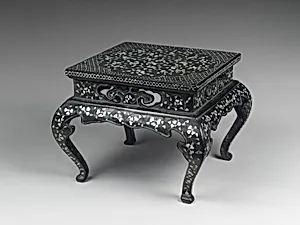
Medium
Lacquer inlaid with mother-of-pearl and metal wire
Dimensions
H. 10 in. (25.4 cm); W. 13 1/8 in. (33.3 cm); D. 13 1/8 in. (33.3 cm)
Classification
Lacquer
Culture & Period
Korea · Joseon dynasty (1392–1910)
Department
Asian Art
Museum
Metropolitan Museum of Art, New York, NY
Credit
Gift of Florence and Herbert Irving, 2015
Accession Number
2015.500.3.11
Rights
Public Domain
Art Historical Context
This exquisite 19th-century Korean table from the Joseon dynasty (1392–1910) showcases the pinnacle of traditional lacquer craftsmanship. Shaped like a diamond flower (rhombus form) and standing just 10 inches high, it measures about 13 inches across, making it a perfect low table for intimate settings like a scholar's study or tea gatherings. Its surface is adorned with intricate floral scroll (tangcao) motifs—elegant vines and blossoms—crafted in the renowned *najeonchil* technique, where thin mother-of-pearl shells are meticulously cut, inlaid into black lacquer, and accented with delicate metal wire for shimmering highlights. The medium of lacquer inlaid with mother-of-pearl was highly prized in Joseon Korea for its durability, glossy finish, and luminous iridescence, which catches the light to bring patterns to life. This labor-intensive process, often taking months, reflected the era's Confucian emphasis on refined artistry and harmony with nature. Floral scrolls symbolized prosperity and continuity, common in elite furnishings. Now at the Metropolitan Museum of Art through the generous gift of Florence and Herbert Irving in 2015, this table invites visitors to appreciate Joseon Korea's masterful blend of utility and beauty, a testament to anonymous artisans whose skill elevated everyday objects into treasures.