
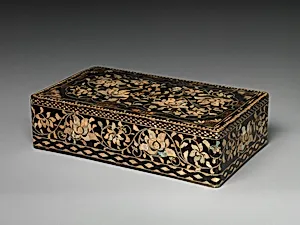
나전 칠 모란 넝쿨 무늬 옷상자 조선|螺鈿漆牡丹唐草文衣箱子 朝鮮|Clothing box decorated with peony scrolls
Unknown Artist
17th century
Medium
Lacquer inlaid with mother-of-pearl and tortoiseshell, and brass wire
Dimensions
H. 8 3/8 in. (21.3 cm); W. 18 1/8 in. (46 cm); L. 31 1/8 in. (79.1 cm)
Classification
Lacquer
Culture & Period
Korea · Joseon dynasty (1392–1910)
Department
Asian Art
Museum
Metropolitan Museum of Art, New York, NY
Credit
Gift of Florence and Herbert Irving, 2015
Accession Number
2015.500.3.3a, b
Rights
Public Domain
Tags
Art Historical Context
This exquisite clothing box from 17th-century Joseon Korea (1392–1910) exemplifies the dynasty's mastery of lacquer, a craft prized for its durability and opulent beauty. Designed to store folded garments, the rectangular box measures about 31 inches long, with a shallow lid perfect for hanbok robes. Crafted during a period of refined Confucian aesthetics, such items were status symbols in elite households, functionality with artistic splendor. The surface is adorned with intricate peony scroll motifs, executed in *najeon chil*—lacquer inlaid with shimmering mother-of-pearl (*najeon*) and tortoiseshell, accented by delicate brass wire. Peonies, known as the "king of flowers" in East Asian culture, symbolize wealth, honor, and prosperity, their lush vines evoking abundance and imperial grace. This labor-intensive technique involved cutting thin shell slices, shaping them into designs, and embedding them in black lacquer layers, creating a luminous, iridescent effect that catches the light. As a gift to the Metropolitan Museum of Art from Florence and Herbert Irving in 2015, this box highlights Joseon artisans' technical virtuosity and cultural reverence for nature's motifs. Visitors can appreciate how it bridged everyday utility with timeless elegance, reflecting Korea's enduring legacy in decorative arts.