
Talisman
Ottoman dynasty (1299–1923), 1825
Medium
Silk, plain weave; edged with plain weave; embroidered with silk and gilt-metal-strip-wrapped silk in chain and lattice filled with twisted picot stitches. Lining: silk, 4/1 satin weave
Dimensions
32.4 × 24.4 cm (12 3/4 × 9 5/8 in.)
Classification
textile
Department
Textiles
Museum
Art Institute of Chicago
Accession Number
71588
Rights
Public Domain
About this artwork
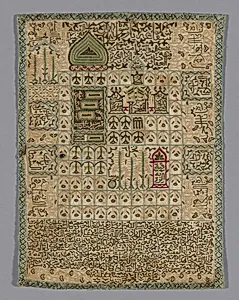
Protective talismans are common throughout Asia and Africa, often placed in or near openings or spaces that are considered to be particularly vulnerable. In earlier centuries, Turkish owners installed an inscribed tile or board directly above the entrance to their house to protect those inside. This object is one of only two such talismans made of cloth that we know of. The embroidery illustrates the architectural plan of a mosque and the inscription at the bottom includes pleas to God for bless...
Art Historical Context
Nestled in the Textile Department of the Art Institute of Chicago, this enchanting *Talisman* from 1825 exemplifies the Ottoman Empire's masterful textile traditions during its long dynasty (1299–1923). Measuring a compact 32.4 × 24.4 cm, this small, portable object was likely worn or carried for personal protection, reflecting the era's blend of artistry and spirituality. Ottoman textiles were renowned for their opulence, often serving practical, decorative, and talismanic purposes in daily life. Crafted from silk plain weave with a luxurious 4/1 satin weave lining, the talisman is edged in matching plain weave and adorned with intricate embroidery. Skilled artisans employed silk threads and gilt-metal-strip-wrapped silk in chain and lattice stitches, filled with delicate twisted picot stitches. These techniques highlight the precision and innovation of Ottoman embroidery, where metallic accents added a shimmering, almost magical allure, evoking wealth and divine safeguarding. Though the artist remains unknown, this piece captures the cultural zenith of Ottoman craftsmanship amid the empire's 19th-century transformations. Visitors, imagine slipping this radiant amulet into your pocket—a testament to enduring beliefs in art's protective power.
About the Artist
Unknown
The artist designated as "Unknown" in our virtual museum's collection exemplifies a poignant chapter in art history: creators whose identities have faded into obscurity despite the enduring power of their work. With only one known artwork attributed to them in our holdings, this figure represents countless anonymous hands that shaped visual culture across centuries. Museums worldwide, including th...