
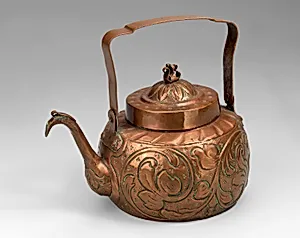
Tea Kettle
ca. 1900
Medium
Decorative Arts
Classification
Decorative Arts
Department
Smithsonian Collection
Museum
Smithsonian American Art Museum
Credit
Smithsonian American Art Museum, Given in memory of Eliphalet Fraser Andrews
Accession Number
1916.6.15
Rights
Public Domain
Art Historical Context
Nestled in the Smithsonian American Art Museum's Decorative Arts collection, this *Tea Kettle*, crafted by an unidentified German artisan around 1900, exemplifies the exquisite metalwork traditions of fin-de-siècle Europe. Produced during a pivotal era when Germany's Jugendstil (Art Nouveau) movement blended functionality with ornate design, such kettles transformed everyday household items into sculptural art objects. Often made from silver or brass with intricate engravings, embossing, or chased motifs inspired by nature—think sinuous floral patterns or whimsical handles—they reflected the era's fascination with beauty in the domestic sphere. Tea kettles like this one held cultural significance beyond mere utility. In late 19th- and early 20th-century homes, they symbolized hospitality and the ritual of tea service, a social custom bridging Victorian restraint and emerging modernism. German workshops, renowned for precision craftsmanship amid rapid industrialization, elevated these pieces to collector's items, showcasing technical virtuosity in soldering, polishing, and decorative techniques that rivaled fine jewelry. Generously donated in memory of Eliphalet Fraser Andrews, this kettle bridges European artistry with American collecting tastes, inviting visitors to appreciate how ordinary objects embody historical elegance and cultural exchange. A testament to anonymous mastery, it reminds us that art thrives in the details of daily life.
About the Artist
Unidentified (German)
**German, Franconia (active ca. 1485–1500)** was an anonymous artist from the Franconian region of northern Bavaria, Germany, renowned for his contributions to late Gothic graphic arts. Little is known of his early life or training, as details about many anonymous masters from this era remain undocumented. Franconia, with its vibrant artistic centers like Nuremberg, fostered a rich tradition of re...