
Teapot
1760/75
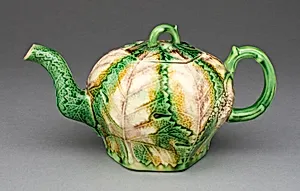
Medium
Lead-glazed earthenware (creamware)
Dimensions
11.2 × 19.7 × 10.1 cm (4 3/8 × 7 3/4 × 3 15/16 in.)
Classification
teapot
Department
Applied Arts of Europe
Museum
Art Institute of Chicago
Accession Number
216737
Rights
Public Domain
Art Historical Context
This elegant teapot, crafted between 1760 and 1775, exemplifies the refined simplicity of creamware—a lead-glazed earthenware revolutionized European ceramics during the 18th century. Measuring a compact 11.2 × 19.7 × 10.1 cm, its creamy hue and glossy finish result from a lead glaze applied over a high-fired clay body, creating a durable, porcelain-like surface at a fraction of the cost. Produced anonymously in England or a similar European workshop, it reflects the era's advances in pottery techniques, blending functionality with understated beauty. Creamware surged in popularity amid Britain's booming tea culture, as affordable imports of Chinese tea fueled middle-class rituals in parlors across Europe and the American colonies. This teapot would have been a staple in such settings, its practical spout and handle designed for daily use while signaling domestic sophistication. Unlike fragile porcelain, creamware's resilience made it ideal for export and mass production, bridging artisanal craft and early industrial methods. Housed in the Art Institute of Chicago's Department of Applied Arts of Europe, this piece highlights how everyday objects became art, embodying the Enlightenment's democratic impulse toward accessible elegance. Visitors, imagine pouring a steaming brew—history in every sip!
About the Artist
Unknown
The artist designated as "Unknown" in our virtual museum's collection exemplifies a poignant chapter in art history: creators whose identities have faded into obscurity despite the enduring power of their work. With only one known artwork attributed to them in our holdings, this figure represents countless anonymous hands that shaped visual culture across centuries. Museums worldwide, including th...