
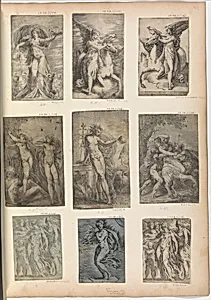
Temperance
ca. 1538 (?)
Medium
Etching
Classification
Prints
Department
Drawings and Prints
Museum
Metropolitan Museum of Art, New York, NY
Credit
Harris Brisbane Dick Fund, 1927
Accession Number
27.78.2(104)
Rights
Public Domain
Tags
Art Historical Context
Andrea Schiavone's *Temperance*, an etching from around 1538, captures the Renaissance fascination with classical virtues through a dynamic composition of male and female nudes alongside the winged horse Pegasus. As one of the four cardinal virtues, Temperance symbolizes moderation and self-control, often depicted as a figure balancing liquids between vessels—a motif echoed here amid the fluid, intertwined forms. Schiavone, a Venetian active in the mid-16th century, drew from Mannerist influences like Parmigianino and Michelangelo,using his works with elongated figures and expressive energy that bridged High Renaissance harmony and emerging Baroque drama. This print exemplifies Schiavone's mastery of etching, a relatively new technique in the 1530s that allowed for freer, more spontaneous lines than traditional engraving. Produced during Venice's golden age of printmaking, it reflects the era's humanist revival of antiquity, where mythological elements like Pegasus—symbol of poetic inspiration and fame—elevate moral allegory to sensual celebration. Housed in the Metropolitan Museum of Art's Drawings and Prints department (Harris Brisbane Dick Fund, 1927), *Temperance* showcases how prints democratized elite art, making virtuoso nudes and virtues accessible to collectors across Europe. (198 words)
About the Artist
Andrea Schiavone (Andrea Meldola) · 1510–1563
Andrea Schiavone, born Andrea Meldolla around 1510 or 1515 in Zara (modern Zadar, Croatia), in Venetian-ruled Dalmatia, hailed from a family rooted in Meldola near Forlì in Romagna, Emilia-Romagna. His father, Simon Meldolla, served as a garrison commander there, and both parents originated from Meldola, where the family held property into the early 16th century. Nicknamed "Schiavone"—"the Slav"—a...