
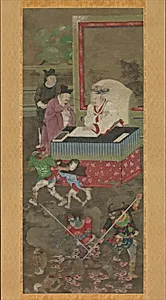
南宋 金處士 十王圖 軸|Ten Kings of Hell
before 1195
Medium
One of five of a set of ten hanging scrolls; ink and color on silk
Dimensions
Image: 51 x 19 1/2 in. (129.5 x 49.5 cm) Overall with knobs: 80 x 27 1/2 in. (203.2 x 69.9 cm)
Classification
Paintings
Culture & Period
China · Song dynasty (960–1279)
Department
Asian Art
Museum
Metropolitan Museum of Art, New York, NY
Credit
Rogers Fund, 1930
Accession Number
30.76.291
Rights
Public Domain
Tags
Art Historical Context
This exquisite hanging scroll, *Ten Kings of Hell*, by the Southern Song dynasty artist Jin Chushi ( before 1195), one of five surviving panels from an original set of ten. Created in ink and color on silk—a medium prized for its luminous sheen and fine detail—the work measures an imposing 51 x 19½ inches, designed to unroll dramatically for contemplation or ritual display. Housed in the Metropolitan Museum Art's Asian Art departmentRogers Fund, 1930), it exemplifies the Song era's masterful fusion of storytelling and artistry. In Chinese Buddhist cosmology, the Ten Kings preside over the afterlife, judging souls amid demons and torments in the realms of hell. Jin Chushi's vivid depictions, likely featuring stern kings enthroned with attendants, servants, and infernal creatures, served both devotional and didactic purposes—reminding viewers of karma's inexorable justice. During the Song dynasty (960–1279), a golden age of refined painting and Neo-Confucian thought intertwined with Buddhism, such scrolls were commissioned by elites for temples or private altars, blending moral instruction with aesthetic elegance. The scroll's survival highlights the fragility of silk paintings, once vulnerable to humidity and war. Its dynamic compositions, with flowing ink lines and subtle color washes, capture the Song mastery of *gongbi* (meticulous brushwork), inviting us to ponder eternity's balance of mercy and retribution.