
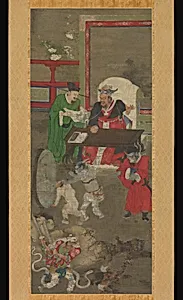
金處士筆 十王図の内|Ten Kings of Hell
before 1195
Medium
One of five of a set of ten hanging scrolls; ink and color on silk
Dimensions
Image: 51 x 19 1/2 in. (129.5 x 49.5 cm) Overall with knobs: 80 x 27 1/2 in. (203.2 x 69.9 cm)
Classification
Paintings
Culture & Period
China · Song dynasty (960–1279)
Department
Asian Art
Museum
Metropolitan Museum of Art, New York, NY
Credit
Rogers Fund, 1930
Accession Number
30.76.293
Rights
Public Domain
Tags
Art Historical Context
This exquisite hanging scroll, titled *Ten Kings of Hell*one of five surviving from a set of ten), created by the Chinese artist Jin Chushi before 1195 the Song dynasty (9601279). Painted in ink and color on silk, it measures an impressive 51 x ½ inches, designed for ritual display in temples or scholarly homes. The Song era was a golden age for Chinese painting, blending meticulous brushwork with philosophical depth, and silk's luminous surface enhanced the scroll's vivid storytelling. Depicting the Ten Kings—Buddhist deities who judge souls in the afterlife—this work draws from Chinese interpretations of Tibetan and Indian cosmology. Each king presides over a hellish realm, surrounded by demons, serpentine creatures, swords, and tormented men, serving as a moral cautionary tale. Such scrolls promoted ethical living, warning of karmic consequences and encouraging piety amid Song society's blend of Confucianism, Daoism, and Buddhism. Jin Chushi's style reflects professional Song painters' skill in dynamic compositions and expressive figures, using layered inks for eerie atmospheres and bold colors for infernal drama. Acquired through the Rogers Fund in 1930, this Metropolitan Museum treasure offers a window into medieval Chinese views of death and justice, captivating visitors with its blend of terror and spiritual insight.