
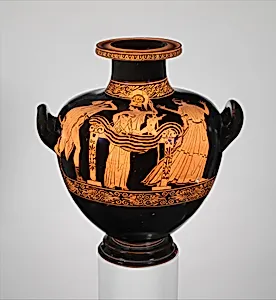
Terracotta hydria: kalpis (water jar)
ca. 460–450 BCE
Medium
Terracotta
Dimensions
H. 14 1/2 in. (36.8 cm) diameter without handles 11 5/16 in. (28.7 cm)
Classification
Vases
Culture & Period
Greek, Attic · Classical
Department
Greek and Roman Art
Museum
Metropolitan Museum of Art, New York, NY
Credit
Fletcher Fund, 1925
Accession Number
25.28
Rights
Public Domain
Tags
Art Historical Context
This elegant terracotta hydria, or water jar, was crafted in Athens around 460–450 BCE during the Classical period. Attributed to the Nausicaä Painter, it exemplifies the refined red-figure technique that allowed artists to depict figures with greater naturalism and detail against the clay’s warm surface. The vessel’s graceful shape, with its vertical handles and broad body, was designed both for practical use in carrying water and for display, often in domestic or funerary settings. The painted scene centers on the infant Herakles confronting two serpents, a pivotal moment from Greek mythology where the hero demonstrates his divine strength. Athena’s presence underscores themes of divine protection and favor, while the inclusion of other infants adds narrative depth. Such mythological subjects on everyday objects like hydriai helped transmit cultural stories and values across Athenian society. As a product of Attic workshops, this kalpis reflects the artistic peak following the Persian Wars, when vase painters like the Nausicaä Painter contributed to Athens’ reputation for sophisticated pottery. Its presence in the Metropolitan Museum’s collection highlights the enduring appeal of these functional artworks as windows into ancient Greek religion, heroism, and daily life.