
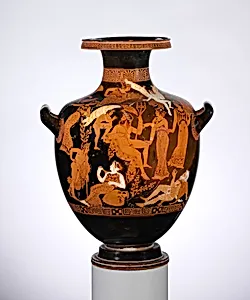
Terracotta hydria: kalpis (water jar)
early 4th century BCE
Medium
Terracotta
Dimensions
H. 17 5/8 in. (44.7 cm); diameter mouth 7 in. (17.8 cm); diameter foot 6 1/4 in. (15.8 cm)
Classification
Vases
Culture & Period
Greek, Attic · Late Classical
Department
Greek and Roman Art
Museum
Metropolitan Museum of Art, New York, NY
Credit
Fletcher Fund, 1956
Accession Number
56.171.55
Rights
Public Domain
Tags
Art Historical Context
This elegant terracotta hydria, or kalpis, was crafted in Athens during the early fourth century BCE by the Erbach Painter, a specialist in Late Classical red-figure vase painting. Standing just under eighteen inches tall, the vessel was designed both for practical use—carrying and pouring water—and as a finely decorated object worthy of display. Its graceful shape, with a broad shoulder and elegant foot, reflects the refined proportions favored in Attic workshops at the close of the Classical period. The painted decoration features several Olympian deities, including Apollo, Dionysus, Eros, and Poseidon, whose presence suggests a mythological gathering or procession. Such divine subjects were popular on vessels intended for symposia or funerary offerings, linking everyday life with the sacred realm. The Erbach Painter’s fluid lines and delicate rendering of drapery and anatomy exemplify the graceful, slightly more ornate style that emerged after the height of the fifth-century Classical tradition. Acquired by the Metropolitan Museum in 1956, this hydria offers visitors a vivid glimpse into Greek beliefs about the gods and the high artistic standards of Athenian pottery workshops that once supplied markets across the Mediterranean.