
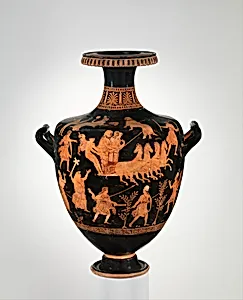
Terracotta hydria (water jar)
ca. 340–330 BCE
Medium
Terracotta
Dimensions
29 3/4 × 22 1/2 × 17 3/4 in. (75.6 × 57.2 × 45.1 cm) Diam. of foot: 8 1/2 in. (21.6 cm) Diam. of rim: 9 1/2 in. (24.1 cm)
Classification
Vases
Culture & Period
Greek, South Italian, Apulian · Late Classical
Department
Greek and Roman Art
Museum
Metropolitan Museum of Art, New York, NY
Credit
Gift of Miss Matilda W. Bruce, 1907
Accession Number
07.128.1
Rights
Public Domain
Tags
Art Historical Context
This stunning terracotta hydria, or water jar, hails from the vibrant world of South Italian Greek pottery in Apulia around 340–330 BCE, during the Late Classical period.ed by the Group of.M. F 308—a workshop known for its dynamic red-figure technique—this vessel stands nearly 30 inches tall, its elegant form featuring three handles ideal for carrying water in ancient households or rituals. Apulian vases like this one were prized for their monumental size and richly painted narratives, often used in funerary contexts to honor the deceased. The hydria's surface bursts with mythological drama, showcasing gods and goddesses including Aphrodite, Athena, Eros, Hecate, and Zeus, alongside spirited horses and chariots. These scenes reflect the Apulian fascination with epic tales from Homer and local myths, blending heroism with divine intervention. The red-figure style—where figures are outlined in black slip on a fired orange clay background—allowed painters to add intricate details like flowing drapery and expressive faces, highlighting the technical mastery of these anonymous artisans. As a gift to the Metropolitan Museum of Art in 1907, this hydria offers a window into the cultural crossroads of Greek colonists in southern Italy, where everyday objects became canvases for immortality. Visitors, imagine drawing water while surrounded by the Olympian court—art that quenches both thirst and curiosity!