
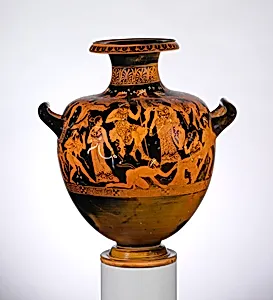
Terracotta hydria: kalpis (water jar)
early 4th century BCE
Medium
Terracotta
Dimensions
H. 17 3/16 in. (43.6 cm); diameter of mouth 6 9/16 in. (16.7 cm); diameter of foot 6 1/16 in. (15.4 cm)
Classification
Vases
Culture & Period
Greek, Attic · Classical
Department
Greek and Roman Art
Museum
Metropolitan Museum of Art, New York, NY
Credit
Fletcher Fund, 1956
Accession Number
56.171.56
Rights
Public Domain
Tags
Art Historical Context
This elegant terracotta hydria, or water jar, known as a kalpis, was crafted in Athens during the early fourth century BCE, a time when Greek vase painting reached refined heights in the Classical period. Standing just over seventeen inches tall, the vessel would have been both functional—used for carrying and pouring water—and a showcase for mythological storytelling. Its red-figure decoration, typical of Attic workshops, features Aphrodite and Poseidon alongside lively maenads and satyrs, evoking themes of divine love, the sea, and Dionysian revelry that resonated deeply with ancient Greek audiences. Attributed to the Meleager Painter, the jar reflects the artist’s distinctive style, marked by graceful figures and expressive poses that brought movement to the curved surface. Such vases were prized not only in daily life but also as offerings in tombs or sanctuaries, preserving glimpses of Greek religion and social values for modern viewers. Today in the Metropolitan Museum’s collection, it invites us to appreciate how everyday objects became canvases for timeless myths.