
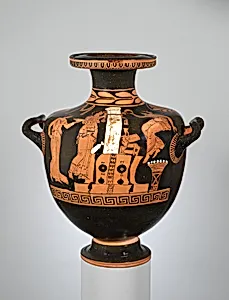
Terracotta hydria (water jar)
ca. 375–350 BCE
Medium
Terracotta
Dimensions
H. 16 1/16 in. (40.8 cm)
Classification
Vases
Culture & Period
Greek, South Italian, Apulian · Late Classical
Department
Greek and Roman Art
Museum
Metropolitan Museum of Art, New York, NY
Credit
Fletcher Fund, 1956
Accession Number
56.171.65
Rights
Public Domain
Art Historical Context
This terracotta hydria, or water jar, was created around 375–350 BCE in Apulia, a flourishing Greek colony in South Italy during the Late Classical period. Standing just over 16 inches tall, the vessel reflects the region’s distinctive artistic traditions, where Greek settlers adapted mainland techniques to local tastes. As a practical container for carrying water, it also served as a canvas for painted decoration, blending utility with aesthetic refinement. The work is attributed to the Iliupersis Painter, whose style is characteristic of Apulian red-figure vase painting. This approach allowed for lively figures and narrative scenes on curved surfaces, showcasing the technical skill of South Italian potters who often drew from both Greek mythology and contemporary life. Such vases highlight the vibrant cultural exchange between Athens and its western colonies. Acquired by the Metropolitan Museum in 1956 through the Fletcher Fund, this hydria offers modern visitors an intimate connection to ancient daily rituals and the enduring appeal of Greek ceramic art.