
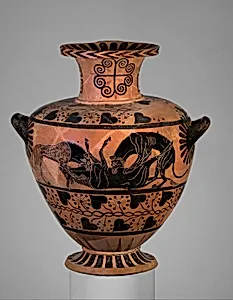
Terracotta hydria (water jar)
ca. 520–510 BCE
Medium
Terracotta
Dimensions
H. 16 3/4 in. (42.5 cm) diameter of body 12 15/16 in. (32.8 cm) diameter of lip 7 3/8 in. (18.8 cm) diameter of foot 7 1/16 in. (18 cm) width with handles 14 15/16 in. (38 cm)
Classification
Vases
Culture & Period
Greek, Caeretan · Archaic
Department
Greek and Roman Art
Museum
Metropolitan Museum of Art, New York, NY
Credit
Fletcher Fund, 1964
Accession Number
64.11.1
Rights
Public Domain
Tags
Art Historical Context
Step into the vibrant world of Archaic Greece with this striking terracotta hydria, water jar, crafted by the Eagle Painter around 520–510 BCE.ributed to this master of Caeretan pottery—a Greek style produced in the Etruscan city of Caere (modern Cerveteri)—the vase stands 16¾ inches tall, its ample body (nearly 13 inches wide) designed for carrying and pouring water. With three handles for practical use, it exemplifies the fusion of everyday utility and artistic splendor in ancient Mediterranean life. Adorned in the black-figure technique, where figures are painted in glossy black slip and details incised to reveal the clay beneath, this hydria bursts with dynamic animal motifs: fierce lions, powerful bulls, graceful horses, and spotted leopards. These exotic beasts, arranged in lively friezes, reflect the Eagle Painter's signature style, drawing from Eastern influences and celebrating the wild ferocity of nature. Such vases highlight cultural exchange between Greeks and Etruscans, serving as prized imports that bridged worlds. Acquired through the Fletcher Fund in 1964, this Metropolitan Museum treasure offers a window into Archaic innovation—where form met fantasy, and mythology roamed free on functional clay.