
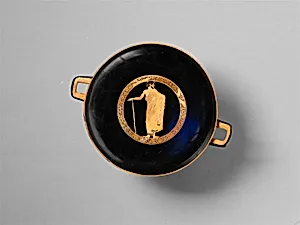
Terracotta kylix (drinking cup)
mid-5th century BCE
Medium
Terracotta
Dimensions
H. 3 7/8 in. (9.9 cm); diameter 9 1/4 in. (23.5 cm)
Classification
Vases
Culture & Period
Greek, Attic · Classical
Department
Greek and Roman Art
Museum
Metropolitan Museum of Art, New York, NY
Credit
Purchase by subscription, 1896
Accession Number
96.18.68
Rights
Public Domain
Tags
Art Historical Context
Step into the lively world of ancient Athens with this exquisite terracotta kylix, a drinking cup crafted by the vase-painter Makron around the mid-5th century BCE. just 3⅞ inches high and 9¼ inches diameter, its wide, low profile was perfectly suited for the symposia—boisterous male drinking parties where Greek elites reclined, debated philosophy, and reveled in poetry and song. Attic Greek pottery like this exemplifies the Classical period's peak in ceramic artistry, blending functionality with stunning visual storytelling. Makron, one of the era's most prolific red-figure painters, specialized in dynamic scenes often featuring athletic youths or convivial men, as hinted by this vessel's thematic tags. The red-figure technique—where figures were outlined in black slip and details incised or painted, leaving the clay's natural red tone to shine through—allowed for unprecedented realism and expressiveness, revolutionizing vase decoration after the earlier black-figure style. This innovation captured subtle gestures and anatomy with graceful precision, reflecting the Greek ideal of kalokagathia, the harmony of body and mind. Housed in the Metropolitan Museum of Art's Greek and Roman Art Department since its 1896 purchase by subscription, this kylix offers a tangible glimpse into daily elite life over 2,500 years ago. Imagine sipping diluted wine from its elegant form—timeless artistry in every curve!
About the Artist
Makron
Makron stands as one of the most prolific masters of Attic red-figure vase painting, active in Athens around 490–480 BC during the late Archaic to early Classical transition.) Little is known of his early life or formal training, as such details remain undocumented for many ancient potters and painters of this era. Exclusively employing the red-figure technique—which allowed for intricate detailin...